Mostrando entradas con la etiqueta Political. Mostrar todas las entradas

1/9/11

German Crisis after World War 1

In this period, we will see Germany going through a tremendous political change, from a monarchy to a republic, later turning on a dictatorship, with Adolf Hitler, as seen in the article below "Hitler's Rise to Power". Also, Germany will pass through disastrous economic crisis.

Kaiser Wilhelm II: abdication
Wilhelm, the son of Prince Frederick Wilhelm of Prussia and Victoria, was born in Berlin in 1859. He received a strict military and academic education at the Kassel Gymnasium and the University of Bonn. In 1888 Wilhelm II became the 9th King of Prussia and the 3rd Emperor of Germany.
With Germany actively seeking an armistice and revolution threatening, calls for Kaiser Wilhelm II to abdicate grew in intensity. Wilhelm was deeply unwilling to make such a sacrifice, for him it was a really big shame to have to leave the power.
After the outbreak of the German Revolution, Wilhelm could not make up his mind whether or not to abdicate. In the hope of preserving the monarchy, Wilhelm's abdication both as German Emperor and King of Prussia was abruptly announced by the Chancellor, Prince Max of Baden, on 9 November 1918, before he had in fact consented to abdicate.
Wilhelm formally abdicated, in other words, the abdication instrument was signed in November 28 and then, went into exile in Holland. His abdication proclamation was published in Berlin on November 30, 1918.
Having finished with the Kaiser's abdication Prince Max resigned the throne, handing power to incoming Chancellor Friedrich Ebert who, appealed for public calm and promised the German public that the incoming government would be a government of the people.

The Weimar Republic, 1918-1933
The Weimar Republic, proclaimed on November 9, 1918, was born in the middle of military defeat and social revolution. In February the assembly elected Friedrich Ebert as the republic's first president.
In mid-1919 the assembly ratified the constitution of the new Weimar Republic. The constitution established a federal republic consisting of nineteen states. The republic's government was a mixed strong president and parliamentary system, with the president seen by many as a sort of substitute Kaiser. The president was elected by popular direct ballot to a seven-year term and could be reelected. He appointed the chancellor and, pursuant to the chancellor's nominations, also appointed the cabinet ministers. However, the cabinet had to reflect the party composition of the Reichstag and was also responsible to this body. Election to the Reichstag was by secret ballot and popular vote. Suffrage was universal.
Then, Stresemann was elected chancellor, someone who supported the Weimar Republic because it seemed the best course of action rather than from a firm commitment to parliamentary democracy, he also became convinced that Germany's economic problems and differences with other countries could best be resolved through negotiated agreements.
Chancellor only from August to November 1923, in this brief period, he introduced measures to bring the currency situation under control, problem faced in the Weimar Republic was the several attempts of coup d’e etat. It was granted a general silence of the atmosphere after these problems had been solved; the Weimar Republic was about to have a period of relative calm that lasted until the end of the decade.

Years of crisis (1919–1923)
In early the postwar years, inflation was growing at an alarming rate, but the government simply printed more and more banknotes to pay the bills. By 1923, the Republic claimed it could no longer afford the payments required by the Versailles Treaty, and the government evaded on some payments. In response, French and Belgian troops occupied Germany's most productive industrial region at the time, taking control of most mining and manufacturing companies in January. Strikes were called, and passive resistance was encouraged. These strikes lasted eight months, further damaging the economy.
Since workers made strikes, the government paid them benefits to keep them calm, more banknotes were printed, giving a period of hyperinflation. The 1920s German inflation started when Germany had no goods with which to trade. The government printed money to deal with the crisis; the payments were made with worthless paper money. Circulation of money rocketed, and soon banknotes were being overprinted to a thousand times their nominal value and every town produced its own notes. On November 25, 1923, a new currency, the Rentenmark, was introduced like a solution, as a monetary reset. At that time, one dollar was equal to 4.2 Rentenmark.

31/8/11

Spanish Civil War


In July 18th in 1936, the most conservatives Spanish militaries led their troops into a revolt against the Republican government. The militaries expected little opposition to their manifestation, but they were not aware the government and its supporters were strong enough to battle them. This led to a three year war.
This civil war is known to be as a war of contradictions and political fighting. Both sides had troubles in maintaining a stable support from groups or political parties.
The Government had the support of all the Left political parties, the Republicans, the Socialists, the Communists, and the Anarchists. They and their associated Trade Unions provided with weapons to the military service that resisted the manifestation at the beginning. Some parts of the Military Forces stayed loyal to the Republican Government, like the most of the Navy, also a big portion of the Air Force, some units of the Peninsular Army, some parts of the Civil Guard and Frontier Guards and the majority of the national Riot Police. Some foreign supporters were the French Socialist Government, the Mexican Government and the Russian Government. Also many foreign volunteers participated being part of the International Brigades.
The Insurgents, also called the Nationalists, had the support of the Army of Africa, a part of the Peninsular Army, the remaining part of the Civil Guard, National Riot Police and Frontier Police. Also the Traditionalist and Right Political parties were on their side. Both parties had armies which helped in the resistance and battling, this made their participation of great importance. The Catholic Church supported the Insurgents.
The Nationalists also received foreign military aid. The Right governments of Italy and Germany sent militaries, tanks, aircraft and artillery. Also some Portuguese, French and Irish volunteers fought with the Insurgent armies.

The Battles and their Main events:


The Siege of the Alcazar: July 20th to September 27th, 1936
After the Rising in Madrid had failed, the Nationalists occupied the Military Academy in the Alcazar fortress, in Toledo. The people who participated in the battle were mainly from the local Civil Guard and Falange, commanded by Colonel Jose Moscardo. For two months the Insurgents held out against the Republican Army by besieging them.
They were finally relieved when the Army of Africa, led by Colonel Jose Varela, stormed Toledo.

The Republican invasion of Majorca: August 16th to September 3rd, 1936
On August 16th, the Catalan troops (republican), led by Captain Bayo, landed on Majorca. The Nationalist Army on Majorca was commanded by Colonel Garcia Ruiz. With the help of Italian aircraft and bombers the Nationalists were able to stop any further Republican advance, and on September 3rd they attacked the Republican bridgehead. The Catalan troops rapidly went into their ships and escaped.

The Battle for Madrid: November 8th to November 23rd, 1936
The Nationalists wanted to make an attack on Madrid hoping to capture the Spanish capital and ending the war. Their Army was led by General Emilio Mola and most of the participants were from the African Army. At the beginning, almost three-quarters of the University City fell to the Nationalists, but the republican army supported by Russian tanks and aircraft, stopped any Nationalist advance. Also the international Brigade went to aid the republican army. By November 23rd, both sides were exhausted by the fighting. Although the Nationalists had in their control the North and West areas of the city, all frontal attacks upon Madrid would be likely to fail.

The Battle for the Corunna Road: December 13th (1936) to January 15th, 1937
As the frontal attack upon Madrid had failed, the Nationalists now tried to tighten to cut off the capital from the rest of Republican Spain. On December 13th General Jose Varela attacked the Corunna Road (which is 25 miles to the North of Madrid). Between January 3rd and 15th his forces held a series of fierce attacks against the Republican troops but, as dead people were left on both sides, it became apparent that the situation had become a tie.

The Battle for Malaga: January 17th to February 6th, 1937
Having the Italian volunteers in Spain made the Nationalists feel they were able to set an attack to the southern provinces of Republican Spain. Although large numbers of Republican troops had the capacity to defend Malaga, they were not organised. By February 3rd, the attackers had reached the outskirts of the city and, three days later, the Nationalists entered Malaga.

The Battle of Jarama: February 6th to February 24th, 1937
The Nationalists renewed their attempts to capture Madrid. This time they concentrated their efforts on cutting the Valencia Road where it runs through the Jarama Valley to the south-east of the city. The Nationalists, under the leadership of General Luis Orgaz, began their attack on February 6th and, by February 11th, they had driven the Republican army, commanded by General Sebastian Pozas, across the River Jarama. By February 24th, when the battle ended, the Nationalists had failed again to cut Madrid off from the rest of the Republic, because the republican army was able to defend themselves, stopping the Nationalists plans.

The Advance on the Mediterranean Coast: March 9th to July 23rd, 1938
With the failure of the Republican attack upon Teruel the Nationalists were now able to set an attack on Aragon and Levante. The intention was to cut Republican Spain into two parts. The manifestation was led by General Fidel Davila and began on March 9th. Lerida, in Catalonia, surrendered to the Nationalists on April 3rd, and twelve days later Vinaroz, a village on the Mediterranean coast, was captured and the Republic was cut in two. The Nationalists wanted to make this gap bigger and on June 14th they captured Castellon de la Plana. Republican resistance was increasing, and the Nationalists stopped for a while the invasions for their troops to rest before the attack on Valencia.

The Battle of the Ebro: Between July and November in 1938
The Republic ordered General Juan Modesto to set an attack across the River Ebro. Made by the newly formed Republican Army of the Ebro, forced the Nationalists, who were led by General Juan Yague, to stop their invasions. In its initial phase the offensive was very successful, then it began to lose force. Later, it was the Nationalists who forced the Republicans to retreat. This battle ended on October 30th, in a massive Nationalist attack and by November 18th the Republicans had been forced back across the River Ebro.

The Battle for Barcelona: December 23rd (1938) to January 26th, 1939
The nationalists now set an attack against Catalonia. The attack against the forces defending the Republicans was made by six nationalist armies. This was too much for the already exhausted republicans. They went back to Barcelona and once Borjas Blancas was captured on January 4th, they had lost. The Republican troops maintained a resistance in Barcelona anyways until January 26th, when the city surrendered.

23/8/11

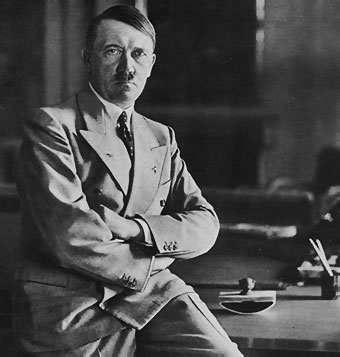
Hitler's Rise to Power


After the disastrous World War I, German monarchies came to an end. A Republic was proclaimed (the president had political and military power and a parliamentary democracy) and because Berlin was in chaos, the Central Government was in the Province of Weimar (1918) for a period of time, where a National Assembly was elected in order to write the Constitution. The president had the right to dismiss the cabinet, dissolve the Reichstag, and prohibit legislation, so the legislative powers of the Reichstag were weakened. The government included the Social Democratic Party, the German Democratic Part and the Center Party, which were very popular and supported.

The Treaty of Versailles was ratified in 1919 and Germany had to pay a lot of reparations for all the damages caused by the war. Germany also lost her colonies and a big part of her territory. This treaty was humiliating, degrading and harsh for Germans; many shared the sentiment of seeing Germany as a great nation, just like Hitler did.
After a war in Munich, Hitler was assigned to keep an eye on the German Worker’s Party, which was disorganized and had no plan; however, Hitler saw this party as a way of accomplishing his political ideas. His hate for the Jews became part of the party, so the ads for it came out in the anti-Semitic newspapers. The turning point of Hitler’s career happened in a meeting in October 16, 1919 for the reason that his moving speech enthralled the listeners and then donations were made for the party.
With the help of his party staff, Hitler created a party that had 25 points and continued to win support by exciting people’s emotions and his good ideas. Among the 25 points there were negative comments about the Versailles Treaty, annulling civil rights for the Jews and expelling the one that had arrived to Germany.
Some of the things that attracted the most the people were his promotion of the popular wellbeing, the right of establishment of autonomy for Germans and equal rights for their state, etc.
The Bavarian government confronted the Weimar Republic, accusing it of being too left-winged and Hitler supported this event. On November 8, 1923, Hitler proclaimed in the Beer Hall Putsch a revolution and the next day he tried to take over the Bavarian government with an army together with General Ludendorff. Once they had seized power in Munich, they planned to use the place as an operating center against the republic government, but the police suppressed this revolt and accused them for treason. Ludendorff was exonerated for his services to Germany, but Hitler was convicted for 5 years, but only remained in jail for 8 months, time he used to write a part of his book “Mein Kampf”, which was an autobiographical book that narrated some of his views on the future of Germans.
After serving his time in prison he decided to get the power constitutionally, using his speech skills (convincing, touching) to make people resist the oppression from the Jews and Communists. He organized again the party under the Führer principle.
After failing his attempts to win the elections, in 1933 Hitler decided to enter a coalition government as chancellor. When Hindenburg (president) died, Hitler succeeded him, and as the economy progressed and he shut down other parties’ hostilities, he claimed himself the dictator of Germany.
He readied for a war, calling for the "Führer Conference," when he showed his plans for a war of aggression in Europe. The ones who did not support him were sent away and got support from the lower middle class and peasantry, most of them, Protestants.

But, why did people support Hitler?

First of all, people supported Hitler because he said and promised what each part of the population wanted to hear during that time when Weimar Republic couldn’t solve the problems Germany had and the lives of the people were getting difficult and unfortunate. So he promised something to every part of the population:
People supported Hitler because he promised them what they wanted and needed to hear.


Taken from: http://www.schoolhistory.co.uk/lessons/riseofhitler/whysupport.htm
And to everyone he swore he would bring back honor by ending with the treaty of Versailles and making Germany great.

The League of Nations


A conflict of such level of importance had never happened before. This is, World War I. After this disastrous event, many leaders of that time thought it was necessary to have an international organization that would have the task of preventing this type of catastrophe by maintaining peace and resolving international conflicts when these occurred. Woodrow Wilson claimed his Fourteen Points should serve as the basis for this organization. So the League of Nations was formed in Geneva, Switzerland, since this country hadn’t fought in the War; consequently, it was neutral.

Its constitution contemplated collective security and arbitration as a way of resolving dispute peacefully. If any country opted for war, the League had three ways of controlling its behavior:
- Call on the states in the League’s Assembly to discuss the problem in order and peace and reach a decision.
- Warn the attacker nation that she would need to leave another nation’s territory or face the consequences.
- If the states in argument didn’t listen to the Assembly’s decision, the League could begin economic sanctions, so the aggressor would have to do as the League said (angry people in the aggressor state would force the government to accept the League’s decision). If this didn’t work, physical sanctions could be used. The League could use military force, although it had actually no armed forces available in its disposal, and no member of the League had to provide them in order to join. Plus, most of the countries were devastated after World War I. As a result, it could not threaten anybody and any country would be aware of this limitation.
Some negative aspects of the League of Nations:
- The United States, the most powerful nation, did not join the League, so this blew its reputation.
- Germany was not allowed to the League because one of the punishments in the Treaty of Versailles was not to be considered as a member of any international organization. This was negative in the sense that the League could not apply any of its sanctions to Germany.
- Russia was not allowed either, given that its communist government scared Western Europe
Three of the world’s greatest nations did not support the League. Britain and France, the two most powerful members, were suffering financially and militarily after the War and neither of them wanted to get in any fights that did not involve Western Europe.
Failures and successes of this League can be considered when the League could or could not avoid wars. So while it was valid, the League of Nations managed to avoid some wars and others it couldn’t. The League of Nations succeeded noticing wars in the border disputes between Bulgaria-Greece (1925), Iraq-Turkey (1925-26) and Poland-Lithuania (1927).
In a social level, teams were sent to the Third World to dig fresh water wells, the Health Organization started a campaign to eradicate leprosy; women’s status, refugee work and child slave labor were improved, drugs were controlled, famine was relieved, but most important, problems were being informed, so people knew they existed and should do something about it.
This was just the start for an organization as the United Nations to be created and try ti bring to the world peace.